

























Happy clients
Your Shipping Container Delivered in 3-5 Days
FAQ
Most buyers in Canada choose between two standard sizes: a 20-foot container (about 160 sq ft of floor space) for residential storage, small businesses, and tight properties, or a 40-foot container (about 320 sq ft) for construction sites, larger inventories, and modification projects. High-cube versions add an extra foot of interior height, which makes a noticeable difference for tall equipment or future builds.
If you’re unsure, picture what you’ll store inside: a 20-foot container fits the contents of a 2-bedroom home or a full pickup truck’s worth of equipment, while a 40-foot fits the contents of a 4-bedroom home or a small workshop. Our team can recommend the right size during your quote.
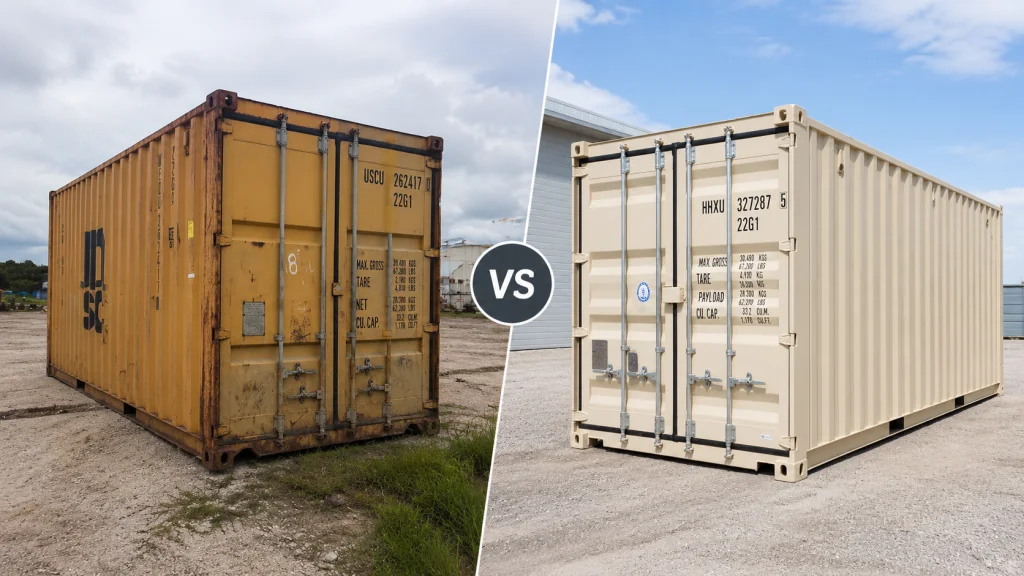
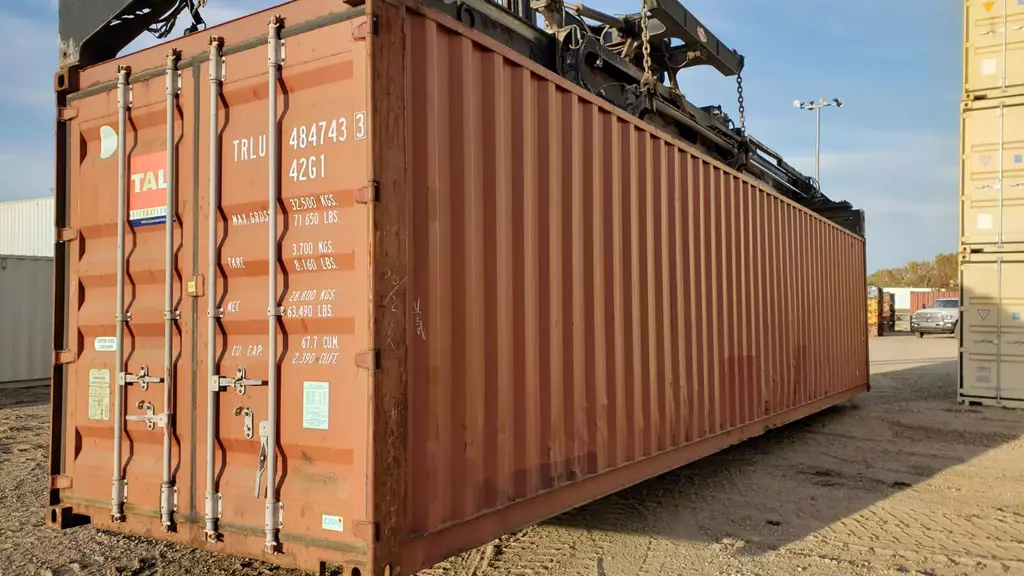
It depends on how you’ll use it. New (one-trip) containers have made a single ocean voyage and arrive in near-perfect condition with clean floors, no rust, fresh paint, making them ideal for container homes, offices, retail builds, and any project where appearance matters or future modifications are planned. Used containers are typically 10–15 years old, may show surface rust or cosmetic dents, but remain fully functional, watertight, and structurally sound.
For storage, jobsites, and general-purpose use, a quality used container delivers the same performance at a lower cost. For customer-facing builds or long-term modifications, new is usually the better investment.
Yes, shipping containers are built from corten weathering steel and engineered to withstand harsh marine conditions, which makes them well-suited to Canadian climates. They’re wind- and watertight, rodent-proof, and rated to handle heavy snow loads, freezing temperatures, and repeated freeze-thaw cycles without compromising structural integrity.
For year-round use as an office, workshop, or living space, most owners add insulation and ventilation to manage interior condensation. For pure storage, a stock container is ready for winter out of the box.
In most Canadian municipalities, you do not need a permit to place a shipping container on private residential or commercial property for personal storage use. However, rules vary widely by city and rural municipality. Some require permits for containers left on-site beyond a set timeframe, in front-yard placements, or in residential zoning areas.
Before delivery, call your local bylaw or planning office and ask two questions: are accessory storage structures permitted on your property type, and is there a size or duration limit? It takes five minutes and prevents costly relocations later.
A shipping container needs level, well-drained ground to sit properly and stay watertight long-term. The three most common foundations are a gravel pad (4–6 inches of compacted crushed stone), concrete blocks placed under each corner casting, or a poured concrete slab. Each option supports the container’s weight, roughly 5,000 lbs empty for a 20-foot, 8,000 lbs for a 40-foot, and keeps the steel off direct soil where moisture accelerates corrosion.
Avoid placing containers directly on grass, dirt, or sloped surfaces. A properly prepared base costs little and can extend the container’s lifespan by decades.
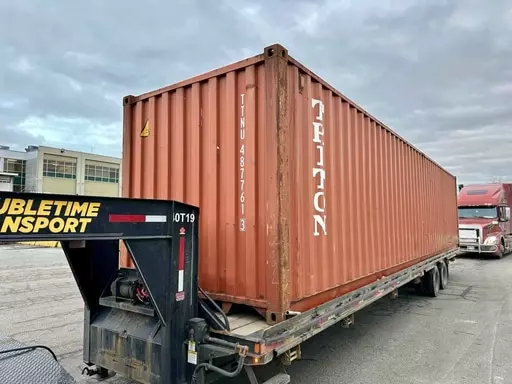
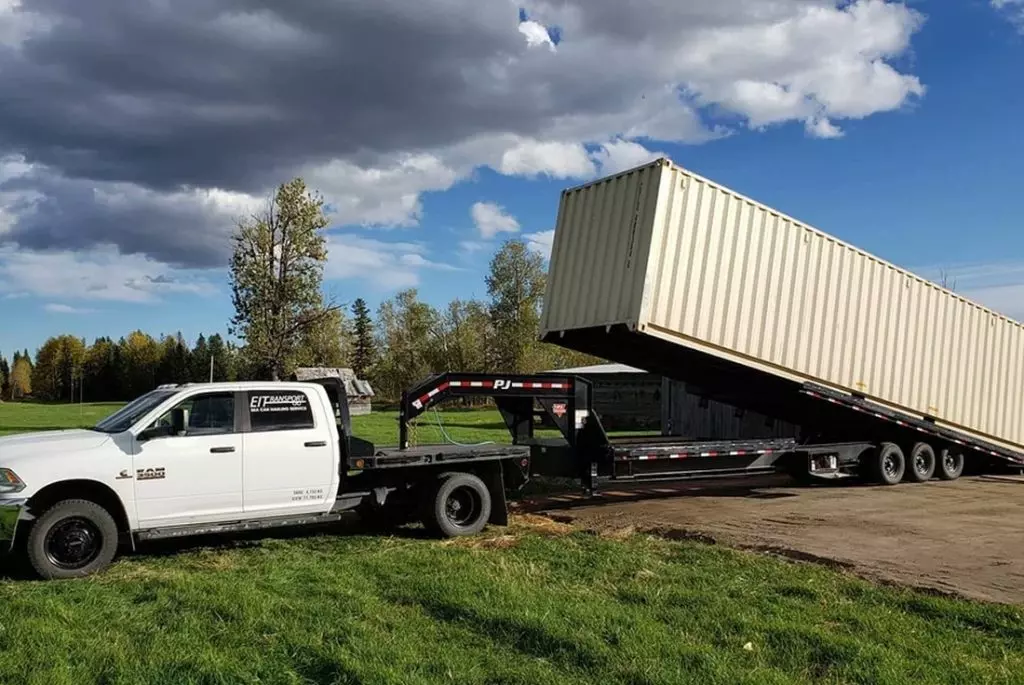
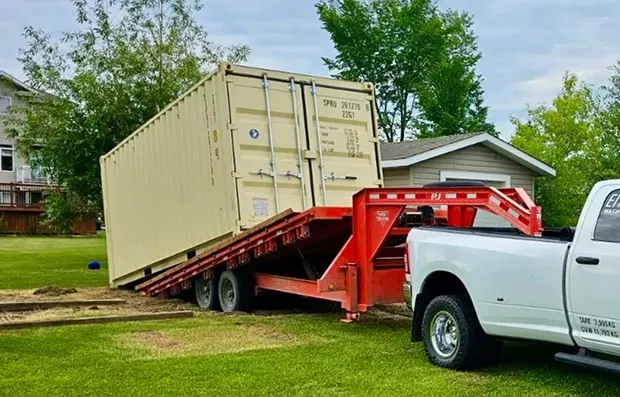
Most shipping containers are delivered within 3–5 business days of order confirmation, depending on your location and inventory at the nearest depot. Rush delivery is often available, mention your timeline in the quote request and we’ll do our best to expedite.
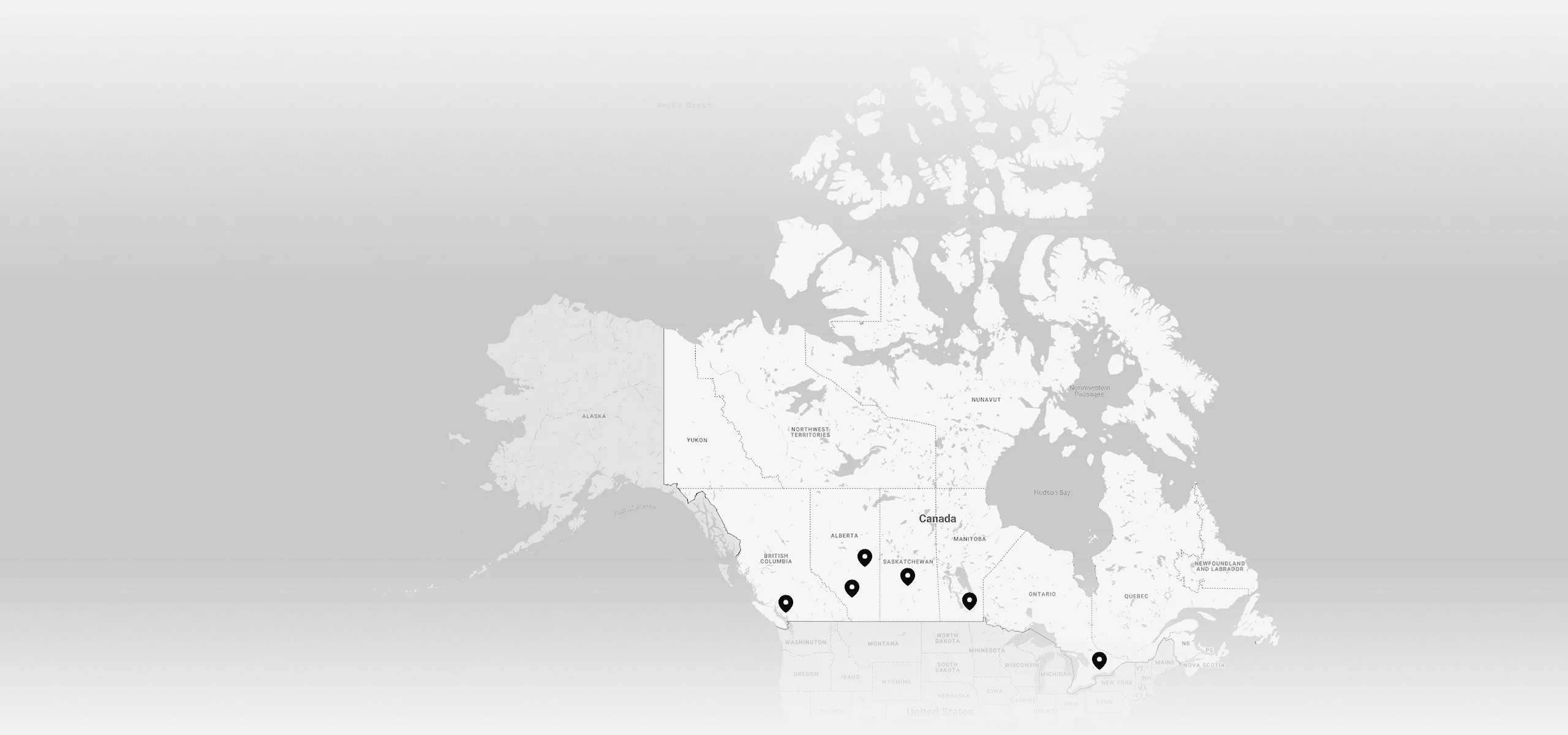
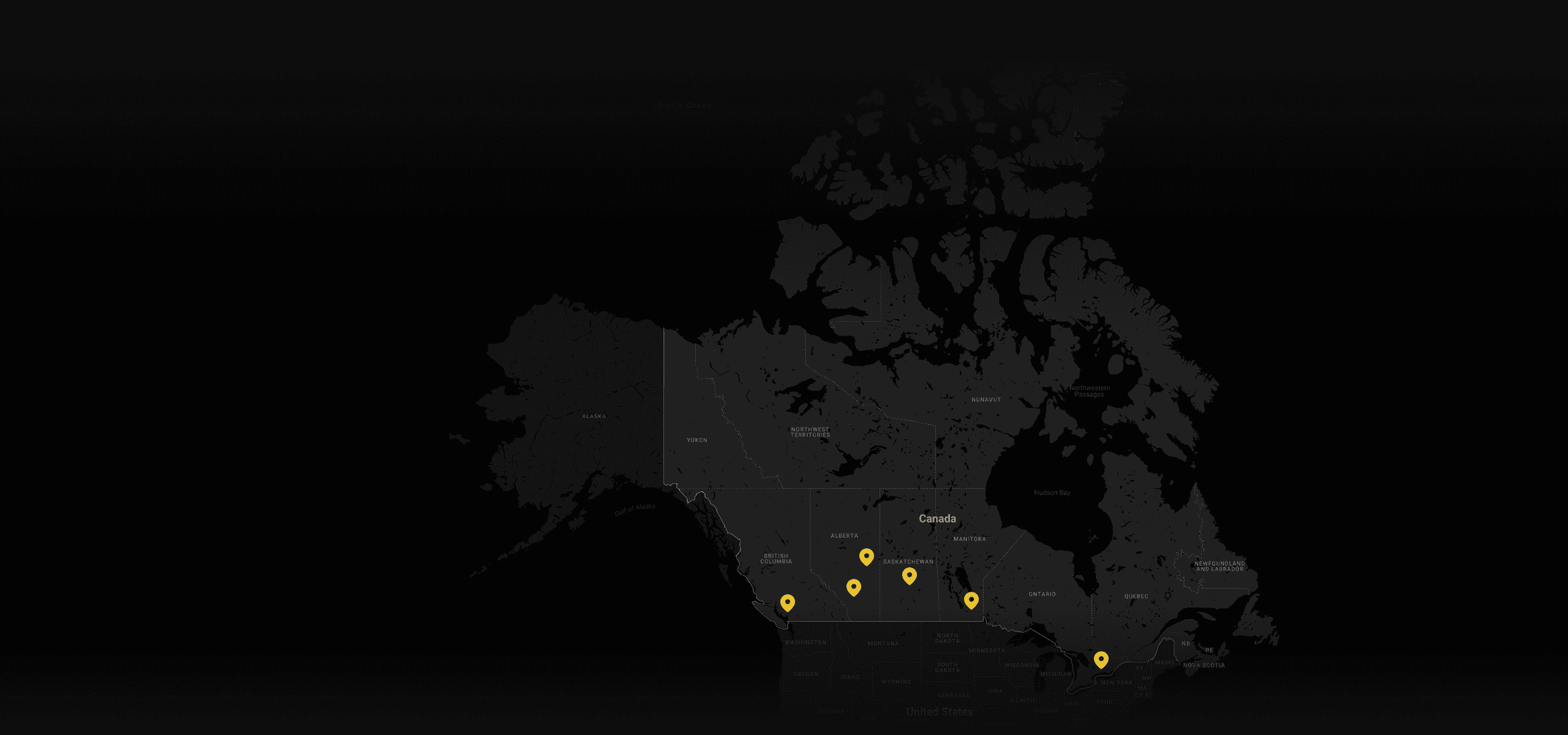
We deliver across Ontario, Alberta, British Columbia, Saskatchewan, and Manitoba. If you’d prefer to handle transportation yourself, you’re welcome to arrange pickup directly from any of our depots.

Shipping Container Locations Across Canada
Blog
How Every Shipping Container Helps Reforest Canada
Canada loses thousands of hectares of forest every year. Wildfires, storms, and clear-cutting take a toll on our land. Trees clean the air, hold soil in place, protect wildlife, and help fight climate change. But planting trees takes time, effort, and the right technology.
For every shipping container we sell, we help plant trees across Canada. It’s one way we give back. When you buy a container for your project, you’re not just getting extra space or storage. You’re helping rebuild forests that support life and future generations. Our containers store your tools. Our trees store carbon. Together, they make a lasting impact.
Who Is Flash Forest?
Flash Forest is a Canadian startup with a big mission. Their goal is to plant over one billion trees using drones and emerging technology. That’s right. They fly special drones that fire pods of seeds into the ground, faster than we ever could by hand. They use science to plant the right trees in the right places.
They focus on native species. They care about the land. And they use real-time data to make sure the trees grow well and support local ecosystems. Flash Forest works with nature and technology side by side. StoreCan is proud to support their work. They’re changing how we plant trees and we’re helping them grow.
How It Works
When you buy a shipping container from StoreCan, part of your purchase goes to tree planting. We team up with Flash Forest to plant trees where Canada needs them most. That might be in areas most affected by wildfires or places losing forest cover fast.
Tree planting doesn’t happen all year round. It follows the right seasons and weather windows to make sure seeds grow strong. So your container order helps plant trees at the best time and in the best places.
What It Means for You
You’re helping rebuild forests right here in Canada. That means cleaner air, healthier land, and a future that lasts longer than steel. Shipping containers leave a footprint. But with every container you buy, you help balance that out with new trees. You give back to the land. You make a lasting mark on something that grows long after your project is done.
That’s a legacy worth leaving.