
New vs Used Shipping Containers: Which Should You Buy?
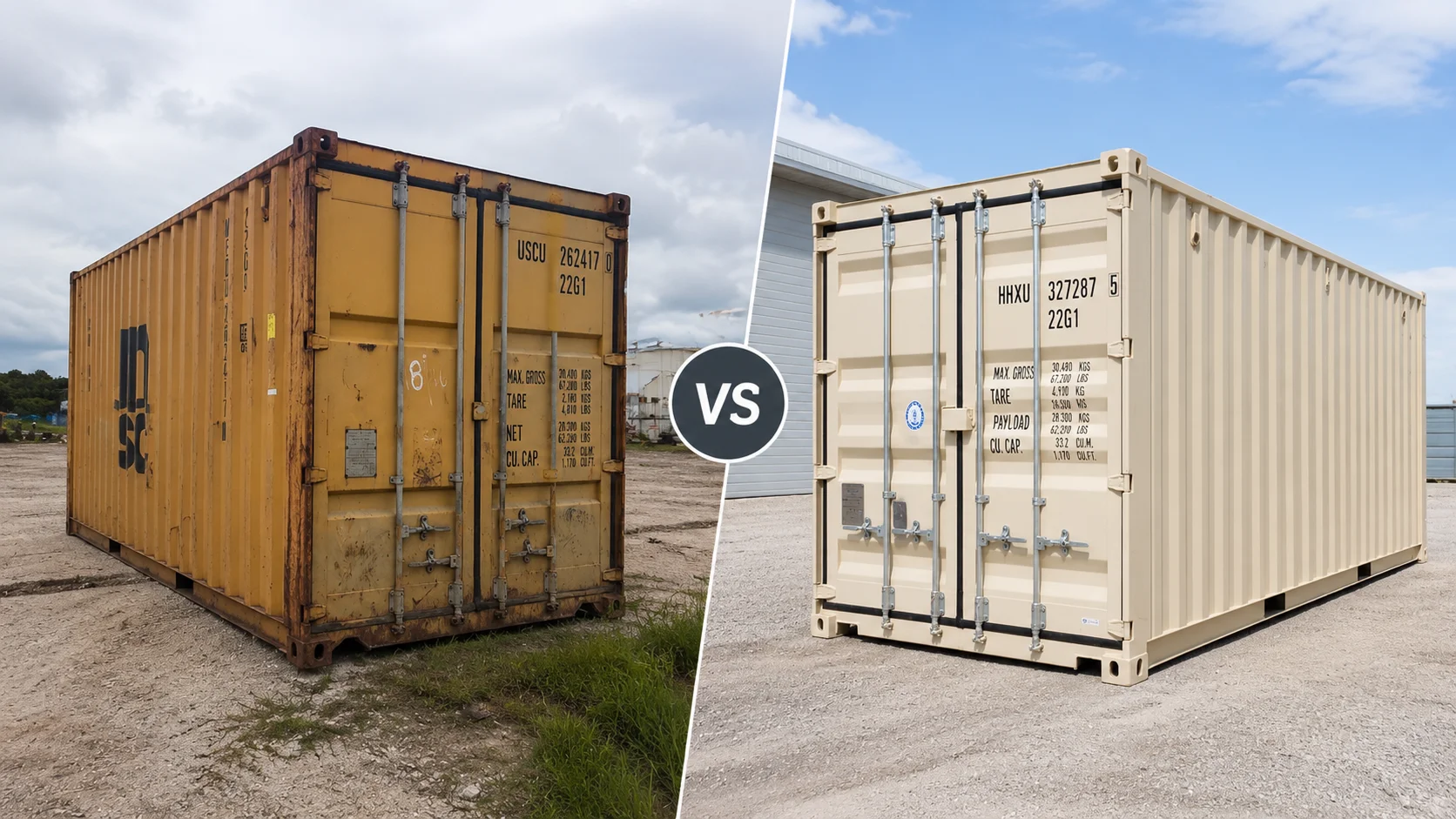
Buying a new or used shipping container usually comes down to one practical question: what are you actually paying extra for? The short answer is this: buy new or one-trip if appearance, cleanliness, modifications, long-term presentation, or lower initial maintenance matter. Buy used if you need secure, practical storage and cosmetic wear is acceptable.
In the container market, “new” often means a one-trip shipping container – a unit that has typically completed one cargo journey before being sold. It should be in much better condition than a used container, but it may still have small scratches, dents, scuffs, or handling marks. Used containers can also be a smart choice when the condition and grade match the job.
Need help deciding? Request a quote or ask for a condition recommendation based on your size, use case, location, and delivery access.
Quick Answer: Should You Buy a New or Used Shipping Container?
If you want the simplest decision rule, start with the use case. For basic storage on a construction site, farm, yard, or industrial property, a good used wind and watertight container is often enough. For customer-facing use, retail inventory, modifications, office conversions, residential projects, or long-term brand presentation, a new or one-trip container is usually worth the premium.
| Choose New / One-Trip If… | Choose Used If… |
| Appearance matters | Budget matters most |
| You need a cleaner interior | Cosmetic wear is acceptable |
| You plan major modifications | You need basic secure storage |
| The container will be customer-facing | It will sit on a job site, farm, or back lot |
| You want lower initial maintenance | You can inspect condition before buying |
Before choosing, compare available 20ft new / one-trip containers, 40ft new / one-trip containers, 20ft used containers, 40ft used container and delivery options for your location. Storecan can help match the right condition, size, and grade to your project instead of buying on price alone.
What Counts as a New Shipping Container?

A new shipping container is usually the newest condition available in the resale market. In many North American sales contexts, sellers use “new,” “new one-trip,” and “one-trip” to describe a container that was manufactured overseas, loaded with cargo, shipped once, and then sold into the storage or modification market.
That does not mean the unit has never been touched. A one-trip shipping container has still been loaded, moved, lifted, stacked, transported, unloaded, and delivered through ports or depots. Buyers should expect a cleaner, newer-looking container, not a museum-perfect product.
New Usually Means One-Trip
Most buyers are not purchasing a container directly off the factory line. They are buying a one-trip shipping container. This matters because it sets the right expectation:
- The container should have a newer floor, paint system, door hardware, seals, and overall appearance.
- It may still have minor dents, scratches, forklift marks, rub marks, or transport scuffs.
- It should typically require less immediate maintenance than a heavily used unit.
- It is often a better starting point for modifications, painting, branding, offices, retail spaces, and customer-facing storage.
The key is to judge the container by condition, not by the word “new” alone.
What You Pay Extra For With New
When you pay more for a new or one-trip container, you are usually paying for:
- Better cosmetic condition.
- Cleaner interior condition.
- Less visible rust and fewer dents.
- Better door operation and gasket condition.
- Newer flooring.
- Better starting condition for modifications.
- Lower initial repair or maintenance risk.
- A more professional look in visible locations.
You are not necessarily paying for perfection. A one-trip unit can still have small marks from transport and handling. If flawless appearance matters, ask for photos, inspection notes, or available premium inventory before purchase.
What Counts as a Used Shipping Container?

A used shipping container has spent time in service before being sold for storage, business, construction, farm, modification, or secondary shipping use. Used does not automatically mean poor quality. Some used containers are structurally sound and perfectly suitable for storage. Others are better treated as repair projects.
The difference is condition and grade. A ten-year-old container that has been well maintained may be a better buy than a cheaper unit with roof dents, damaged seals, floor problems, or heavy corrosion.
Used Does Not Mean Bad
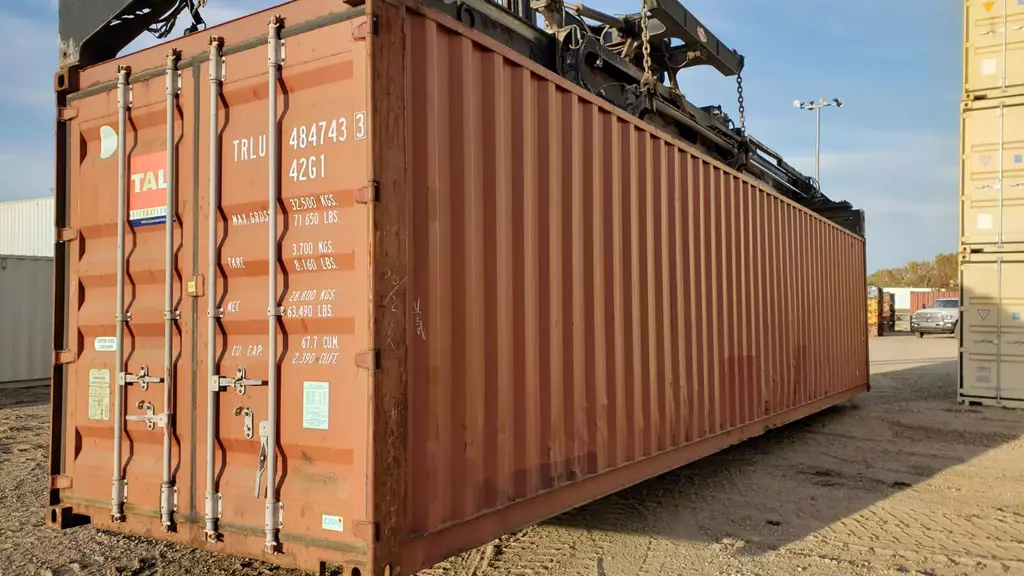
Used containers commonly show signs of working life, such as:
- Surface rust.
- Dents and patches.
- Faded or mismatched paint.
- Shipping line markings.
- Worn door handles or locking rods.
- Floor stains, scratches, gouges, or soft spots.
- Older door gaskets.
- Previous repair work.
Those issues are not always deal breakers. For basic storage, the question is whether the unit is secure, wind and watertight, structurally appropriate for your use, and delivered safely to your site.
Common Used Shipping Container Grades
Used shipping container grades are not always described consistently by every seller, so ask what the grade means in writing. For shipping or export use, verify current cargo-worthy status, CSC requirements, and inspection documents before purchase.
| Grade | Best for | What to verify | Buyer risk |
| IICL / premium used | Buyers who want a cleaner, higher-grade used unit without paying full one-trip pricing | Confirm what inspection standard or seller definition is being used, check photos, doors, roof, flooring, and repair history | Lower than standard used, but still not new; availability may be limited |
| Cargo-worthy | Export shipping, intermodal movement, or buyers needing stronger structural assurance | Verify current cargo-worthy status, valid CSC plate or inspection documentation, and any required shipping-line acceptance | Moderate; good for transport only when paperwork and condition are current |
| Wind and watertight | Storage, job sites, farms, business inventory, tools, and equipment | Check for daylight, roof leaks, door gasket condition, floor condition, and secure locking | Moderate; suitable for storage but not automatically suitable for shipping/export |
| As-is | Repair projects, low-cost projects, parts, or buyers who can inspect and accept risk | Inspect everything: holes, leaks, roof, frame, doors, floor, corrosion, and repair cost | Highest; may need repairs and may not be secure or weather resistant |
New vs Used Shipping Containers: Side-by-Side Comparison
Use this comparison as a practical buying filter. The right answer is not always “new.” The right answer is the lowest-cost condition that safely fits the use case.
| Factor | New / One-Trip Container | Used Container | Practical Buying Note |
| Upfront cost | Higher | Lower | Used often wins when the container is for basic storage and appearance is not important |
| Appearance | Cleaner, newer paint, fewer dents | Dents, rust, faded paint, labels, patches, or colour variation are common | Pay for new when customers, tenants, neighbours, or inspectors will see it |
| Interior cleanliness | Usually cleaner and less worn | May have stains, cargo marks, odours, or floor wear | Inspect used interiors carefully if storing retail goods, furniture, documents, or sensitive inventory |
| Structural condition | Usually better starting condition | Varies by grade and history | Grade and inspection matter more than age alone |
| Weather resistance | Typically strong if doors and seals are in good condition | Wind and watertight units can be good for storage; as-is units may leak | Never assume. Check roof, doors, gaskets, and daylight gaps |
| Maintenance | Lower initial maintenance | May need door adjustment, rust treatment, gasket work, patching, or painting | Used can still be good value if repair needs are minor |
| Lifespan | Usually longer remaining useful life | Depends on prior use, corrosion, repairs, and site conditions | Long-term visible projects often justify new or premium used |
| Modification readiness | Better base for cutting, framing, insulation, paint, windows, and doors | Can work, but may require prep and repairs first | Major modifications often justify starting with a cleaner shell |
| Customer-facing suitability | Strong | Varies; often needs paint or refurbishment | Choose new for retail, office, self-storage, pop-ups, and branded environments |
| Job site suitability | Good, but may be more than needed | Often ideal | Construction sites usually value function over cosmetic condition |
| Storage suitability | Excellent | Often excellent if wind and watertight | Match grade to what you are storing |
| Resale value | Typically stronger | Lower, but purchase price is lower too | Better condition may be easier to resell later |
| Shipping/export suitability | Possible with valid documentation | Only if cargo-worthy and documentation is current | Verify CSC plate, cargo-worthy condition, and acceptance requirements before shipping |
What Is Actually Worth Paying Extra For?
A stronger buying decision starts by separating real value from cosmetic preference. New is not automatically better for every buyer. Used is not automatically a compromise. The premium is worth paying only when the benefit matters to your project.
Appearance
The new-container premium matters when the container will be visible to customers, residents, tenants, city inspectors, employees, or the public. Examples include retail storage near a storefront, a pop-up shop, a customer-facing self-storage site, a residential project, or a branded business location.
In those cases, the cleaner paint, fewer dents, and newer overall presentation can affect trust. A rough-looking container can make the site feel temporary, neglected, or less professional.
Paying extra may not matter when the container will sit behind a warehouse, on a construction site, on a farm, in a back lot, or in an industrial yard. For those uses, a good used container can deliver the same functional value at a lower cost.
Cleaner Interior
A cleaner interior matters when you are storing items that could be affected by odours, residue, dust, floor stains, or prior cargo history. Retail inventory, packaged goods, household items, furniture, documents, event equipment, and customer-owned goods often justify a cleaner starting point.
A used container may still work, but you should inspect the floor, walls, vents, door seals, and smell before buying. If the unit has a strong chemical odour, unknown stains, or signs of moisture, the lower price may not be worth it.
For tools, equipment, machinery, raw materials, and rugged goods, a clean-but-used container may be perfectly acceptable.
Lower Initial Maintenance
A new or one-trip container usually starts with fewer immediate issues. Doors are more likely to operate smoothly, gaskets are newer, paint is fresher, rust is lighter or minimal, and the roof is less likely to have years of dents or standing-water damage.
That can be worth paying for if downtime is expensive, if you need the container placed and used immediately, or if you do not want to coordinate repairs after delivery.
Used is still the smarter value when you can inspect before buying and minor wear does not affect the use case. For many construction, farm, and storage buyers, a used wind and watertight unit gives the best cost-to-function ratio.
Better Starting Point for Modifications
Shipping container modifications are easier when the shell is cleaner, straighter, and less corroded. If you plan to add windows, doors, roll-up doors, insulation, electrical, HVAC, shelving, partitions, or exterior branding, the base unit matters.
A one-trip unit can reduce prep work before cutting, welding, painting, or finishing. It also gives the finished project a more professional look.
Used can still be modified, especially for workshops, tool storage, equipment rooms, or utility spaces. The risk is that repairs, rust prep, floor replacement, or repainting can eat into the savings. Before deciding, compare the used-container savings against the extra labour and materials needed to make it modification-ready.
For project planning, review available shipping container modifications and ask whether your intended build should start from new, premium used, cargo-worthy, or wind and watertight inventory.
Longer-Term Presentation
A container that will be on site for several years deserves more attention than one used for a temporary job. Newer paint, cleaner doors, better seals, and fewer dents may pay off over time if the unit becomes part of a permanent business, storage yard, farm operation, cabin project, or retail environment.
For a short-term job, appearance may not matter. For a long-term installation, the purchase price is only one part of the decision. Consider how the unit will look after several seasons of sun, snow, rain, salt, dust, and repeated access.
Easier Buyer Confidence
New and premium used containers reduce uncertainty. Buyers often choose them because they want fewer unknowns around leaks, odours, floor wear, repairs, and appearance.
That confidence has value. It can simplify the buying process for first-time buyers, residential customers, retailers, and businesses with sensitive goods.
Used containers require more inspection discipline. That does not make them a bad choice. It means the buyer needs to verify condition before purchase rather than relying only on price or a short listing description.
When a Used Shipping Container Is the Smarter Buy
Used containers often deliver the best value when function matters more than cosmetics. If the container needs to be secure, dry, accessible, and affordable, used can be the practical choice.
Construction Sites
Construction sites are one of the strongest use cases for used containers. Tools, materials, temporary equipment, safety gear, and job-site supplies usually need secure storage more than polished appearance.
A wind and watertight used container is often enough, provided the doors work, the lock area is secure, the roof does not leak, and delivery access is confirmed. Spending extra on new may not improve the project outcome unless the site is customer-facing or the container will later be repurposed.
Farms and Industrial Storage
Farms and industrial sites often prioritize durability, security, and usable space. Used containers are commonly a smart match for equipment, feed supplies, parts, seasonal tools, pumps, hoses, fencing, tires, and maintenance inventory.
For these uses, cosmetic dents or faded paint may not matter. Door operation, flooring, weather resistance, and ventilation are more important.
Basic Backyard or Business Storage
For backyard storage, warehouse overflow, business inventory, contractor supplies, or seasonal equipment, a used container can be a strong value. The key is to match the condition to what will be stored.
If you are storing moisture-sensitive goods, inspect more carefully and consider ventilation, shelving, desiccants, or a higher-grade unit. If you are storing rugged items, a standard wind and watertight container may be enough.
Short-Term or Budget-Conscious Projects
If the project is temporary, price-sensitive, or operational rather than customer-facing, used usually deserves first consideration. You can often allocate the savings to delivery, locks, ramps, shelving, lighting, repainting, or site preparation.
The exception is when a used container needs enough repair work that the total cost approaches a better-grade unit. Compare the full cost, not just the sticker price.
Non-Customer-Facing Use
When the container is in a back lot, fenced area, yard, farm, depot, or warehouse property, cosmetic wear is usually less important. A used unit can perform well as long as it is secure, dry, and structurally appropriate for the intended use.
New vs Used Shipping Container Cost: What Affects the Price?
Shipping container cost depends on more than whether the unit is new or used. Prices vary by market, inventory availability, size, delivery distance, condition, grade, and modification requirements. Do not rely on generic online price ranges without confirming current local availability.
If current pricing is available, use it as a starting point, but still confirm the final delivered price. If no current pricing is published, request a quote based on size, grade, delivery postal code, and intended use.
| Cost Factor | Why It Matters | Buyer Tip |
| Size | A 20ft vs 40ft shipping container changes capacity, delivery requirements, and placement space | Compare 20ft containers and 40ft containers based on usable space, site access, and budget |
| Condition | New, premium used, cargo-worthy, wind and watertight, and as-is units price differently | Do not overpay for appearance if the unit will be used for rugged storage |
| Grade | Higher grades usually cost more because they reduce buyer risk | Ask what the grade means and what has been inspected |
| Standard vs high cube | High cube containers provide extra interior height and may cost more depending on supply | Choose high cube when vertical clearance matters for shelving, equipment, or modifications |
| Delivery distance | Delivery can materially affect the final cost | Get a delivered quote, not only a depot price |
| Depot availability | Local supply can change pricing and lead times | Ask what is available near your delivery location |
| Modifications | Doors, windows, vents, insulation, electrical, paint, and shelving add cost | Decide whether to modify before delivery or after placement |
| Local supply and demand | Seasonal demand, port flows, and regional inventory can affect price | Request current pricing instead of relying on old estimates |
| Site access | Tight driveways, slopes, overhead wires, soft ground, and turning limits can affect delivery feasibility | Confirm shipping container delivery requirements before purchase |
Used Shipping Container Inspection Checklist
A used shipping container can be a good buy, but only if you know what to check. Use this shipping container inspection checklist before committing to a specific unit, especially if you are buying for storage, business inventory, construction, farming, or long-term use.
Exterior
- Walk around all four sides.
- Look for major dents, frame bends, deep corrosion, patch repairs, and holes.
- Check corner castings and structural posts for obvious damage.
- Look closely around the lower rails where rust can develop.
- Confirm the lockbox or locking area is secure if theft prevention matters.
Roof
- Inspect from a safe vantage point; do not climb without proper equipment.
- Look for heavy rust, large dents, punctures, standing-water areas, or previous patches.
- From inside the container, close the doors and look for daylight through roof holes.
- Pay attention to dents that may hold water and accelerate corrosion.
Doors and Gaskets
- Open and close both doors fully.
- Check hinges, locking rods, cams, keepers, handles, and door alignment.
- Make sure the doors do not require excessive force to close.
- Inspect rubber gaskets for cracks, missing sections, gaps, or compression damage.
- Check whether the doors seal evenly when closed.
Interior
- Close the doors while inside, if safe, and look for daylight through holes, roof seams, walls, and corners.
- Check for water marks, rust trails, condensation patterns, and signs of leaks.
- Smell the interior before accepting the unit.
- Look for heavy residue, chemical odours, mould, or unknown cargo contamination.
Floor
- Walk the full floor carefully.
- Check for soft spots, rot, delamination, deep gouges, stains, oil residue, or chemical smells.
- Pay close attention near the doors and along wall edges.
- For heavy equipment, confirm floor condition and load suitability with the seller.
Odour and Previous Cargo Concerns
- Avoid units with strong unexplained odours if storing household goods, retail inventory, food-adjacent products, documents, furniture, textiles, or customer property.
- Ask whether the seller knows the prior cargo history, but understand that this may not always be available.
- Consider a cleaner unit or new / one-trip container for sensitive storage.
Paperwork and Certification
- If the container will only be used for stationary storage, wind and watertight condition may be enough.
- If the container will be used for shipping/export, verify current cargo-worthy status, CSC plate requirements, inspection documentation, and acceptance requirements with the seller and carrier.
- Do not assume a wind and watertight container is cargo-worthy.
- Do not assume an old CSC plate means the container is currently accepted for transport.
Delivery Access
- Confirm the delivery truck can access the site.
- Check driveway width, turning radius, overhead wires, tree branches, gates, slopes, soft ground, and unloading space.
- Decide the door orientation before delivery.
- Prepare blocks, supports, or a level base if needed.
- Review delivery requirements before purchase so the right container can actually be placed where you need it.
After inspecting the container, compare the total cost of the unit, delivery, repairs, painting, accessories, and modifications. If you are unsure, request photos or a condition recommendation before buying. A short conversation can prevent paying too much for the wrong grade.
Best Choice by Use Case

| Use case | Recommended condition | Why | What to verify before buying |
| Basic storage | Used wind and watertight or premium used | Usually the best balance of price and function | Leaks, floor condition, door operation, odour, delivery access |
| Construction site | Used wind and watertight | Secure job-site storage usually does not require new appearance | Locking system, doors, roof, floor, placement area |
| Farm equipment | Used wind and watertight or cargo-worthy if heavier-duty condition is needed | Cosmetic wear is usually acceptable; durability matters more | Floor strength, door function, corrosion, ventilation needs |
| Retail inventory | New / one-trip or premium used | Cleaner interior and better presentation reduce risk | Interior cleanliness, odour, seals, condensation control, shelving plan |
| Pop-up shop | New / one-trip | Appearance, customer trust, and modification readiness matter | Exterior condition, modification plan, permits, electrical, delivery access |
| Office conversion | New / one-trip or high-grade used | A cleaner shell lowers prep work and improves final finish | Structural condition, rust, floor, insulation plan, modifications |
| Residential or cabin project | New / one-trip or premium used | Long-term presentation and modification quality matter | Local codes, structural planning, moisture management, delivery route |
| Export shipping | Cargo-worthy with current documentation | Shipping requires more than storage-grade condition | CSC plate, current inspection, carrier acceptance, cargo-worthy status |
| Long-term business storage | New / one-trip, premium used, or good wind and watertight | Depends on visibility and stored goods | Weather resistance, door seals, floor, security, ventilation |
| Customer-facing self-storage | New / one-trip or refurbished premium used | Appearance affects trust and perceived value | Exterior presentation, doors, lockboxes, paint, site layout |
Common Mistakes Buyers Make
The biggest mistakes usually come from focusing on the wrong cost. A cheaper container is not always cheaper after delivery, repairs, repainting, or replacement. A new container is not always better if the project only needs functional storage.
Common mistakes include:
- Buying only on price without checking condition.
- Assuming new means flawless.
- Confusing wind and watertight with cargo-worthy.
- Ignoring delivery costs and site access.
- Not checking doors, floors, roof, seals, and locking rods.
- Choosing a rough used container for customer-facing use.
- Spending too much on new when used would have been enough.
- Buying as-is without understanding repair risk.
- Choosing a 40ft container when delivery access only suits a 20ft container.
- Forgetting to plan ventilation, shelving, ramps, locks, or modifications.
Final Recommendation: New or Used Shipping Container?
Choose a new or one-trip shipping container when appearance, cleanliness, modification readiness, lower initial maintenance, long-term presentation, or customer-facing placement matters. It is usually the stronger choice for retail, office conversions, pop-up shops, residential projects, customer-facing storage, and sensitive inventory.
Choose a used shipping container when budget, practical storage, and functional value matter more than cosmetics. A good used wind and watertight container can be the smarter buy for construction sites, farms, industrial yards, warehouse overflow, equipment storage, and non-customer-facing projects.
The best decision is not simply new vs used shipping containers. It is size, condition, grade, delivery, total cost, and use case. Compare available inventory, ask what each grade means, and request a delivered quote before deciding.
For help choosing the right container, contact Storecan or request a quote. Share what you plan to store, where the container will be placed, whether it will be customer-facing, and whether modifications are planned. That will make the recommendation much more accurate.
FAQs About New vs Used Shipping Containers
Buy new or one-trip if appearance, cleanliness, modifications, customer-facing placement, or lower initial maintenance matters. Buy used if you need practical, secure storage and cosmetic wear is acceptable.
Do not treat any used container as absolutely waterproof. For storage, look for a wind and watertight container and inspect the roof, doors, gaskets, floor, and seams before buying.
Wind and watertight means the container should keep out normal wind and rain when closed and used for storage. It does not automatically mean the container is approved for shipping or export.
Cargo-worthy means the container is considered suitable for cargo transport when it meets required structural and inspection standards. Buyers should verify current cargo-worthy status, CSC requirements, and documents with the seller.
Yes, a used shipping container can be good enough for storage if it is secure, wind and watertight, has working doors, has a solid floor, and matches the sensitivity of what you plan to store.
Often, yes. A new or one-trip container usually provides a cleaner and straighter starting point for windows, doors, insulation, electrical work, paint, offices, retail spaces, and other modifications.
Used is often the better value for a construction site because tools and materials usually need secure storage more than a clean cosmetic appearance. Choose new only if presentation or future reuse matters.
Yes. Used containers can often be painted, cleaned, repaired, or refurbished. Before buying, compare the cost of refurbishment with the cost of starting with a better-grade used or one-trip container.
Check the roof, doors, locking rods, hinges, gaskets, floor, odour, rust, dents, patches, daylight holes, signs of leaks, paperwork if shipping is planned, and delivery access to your site.